March 14, 2026
root
4:11 pm
What is Organic Farming? Benefits, Methods and Importance
Table of Contents
- What is Organic Farming? Benefits, Methods and Importance
- Introduction
- What is Organic Farming?
- Principles of Organic Farming
- Benefits of Organic Farming
- Methods of Organic Farming
- Importance of Organic Farming in India
- Government Support for Organic Farming
- Challenges in Organic Farming
- Future of Organic Farming
- Conclusion
- Frequently Asked Questions
Introduction
Organic farming is a sustainable and environmentally friendly method of agriculture that relies on natural inputs and ecological processes. Instead of using synthetic fertilizers and chemical pesticides, organic farming focuses on natural fertilizers, compost, crop rotation and biological pest control.
In recent years, organic farming has gained significant attention around the world as people become more concerned about food safety, environmental protection and soil health. Farmers are increasingly adopting organic practices to reduce input costs, maintain soil fertility and produce healthy food for consumers.
Organic farming not only benefits the environment but also improves the quality of agricultural products. It promotes biodiversity, protects natural resources and supports sustainable agriculture for future generations.
What is Organic Farming?
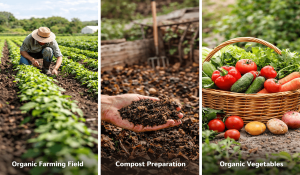
Organic farming is a farming system that emphasizes the use of natural substances and processes to cultivate crops and raise livestock. The primary objective of organic farming is to maintain soil fertility, enhance ecological balance and minimize environmental pollution.
Unlike conventional farming, which relies heavily on chemical fertilizers and pesticides, organic farming uses natural alternatives such as compost, animal manure, green manure and biological pest control methods.
Organic farming also focuses on maintaining the natural balance of ecosystems by encouraging beneficial insects, improving soil structure and conserving water resources.
Principles of Organic Farming
Organic farming is based on several fundamental principles that ensure sustainable agricultural practices.
Health
Organic farming promotes the health of soil, plants, animals and humans by avoiding harmful chemicals.
Ecology
It works in harmony with natural ecosystems and encourages biodiversity.
Fairness
Organic farming promotes fairness and equity in relationships between farmers, workers and consumers.
Care
Organic farming practices are designed to protect the environment for future generations.
Benefits of Organic Farming
Organic farming offers numerous benefits for farmers, consumers and the environment.
1. Improved Soil Fertility
Organic farming improves soil health by increasing organic matter and beneficial microorganisms. Compost and organic manure help maintain soil structure and fertility.
2. Chemical-Free Food
Organic farming produces crops without harmful pesticides and chemical fertilizers, making food safer and healthier for consumers.
3. Environmental Protection
Organic farming reduces soil erosion, water pollution and environmental degradation. It also promotes biodiversity and protects wildlife.
4. Better Crop Quality
Organic crops often have better taste, nutritional value and longer shelf life.
5. Sustainable Agriculture
Organic farming supports long-term agricultural sustainability by maintaining soil fertility and reducing dependency on chemical inputs.
6. Higher Market Demand
Organic products often fetch higher prices in the market due to increasing consumer demand for healthy and chemical-free food.
Methods of Organic Farming
Several techniques are used in organic farming to maintain soil health and control pests naturally.
Crop Rotation
Crop rotation involves growing different crops in sequence on the same field to maintain soil nutrients and reduce pests and diseases.
Composting
Composting is the process of converting organic waste into nutrient-rich fertilizer that improves soil fertility.
Green Manuring
Green manure crops such as legumes are grown and incorporated into the soil to increase organic matter and nitrogen content.
Biological Pest Control
Natural predators and organic pesticides such as neem oil are used to control pests and insects.
Mulching
Mulching involves covering the soil with organic materials like straw or leaves to retain moisture, reduce weed growth and improve soil health.
Importance of Organic Farming in India
Organic farming is becoming increasingly important in India due to rising awareness about environmental sustainability and food safety.
India has favorable climatic conditions and a rich tradition of natural farming practices. Many farmers are adopting organic methods to reduce the cost of chemical fertilizers and improve soil health.
The demand for organic food products such as fruits, vegetables, grains and spices is increasing both in domestic and international markets. This provides farmers with new opportunities to increase their income and access premium markets.
Organic farming also contributes to rural development and employment generation in agricultural communities.
Government Support for Organic Farming
The Government of India promotes organic farming through several schemes and initiatives.
Paramparagat Krishi Vikas Yojana (PKVY)
This scheme encourages farmers to adopt organic farming through cluster-based approaches and provides financial assistance for organic inputs.
National Mission for Sustainable Agriculture (NMSA)
This program promotes sustainable agricultural practices and supports soil health management.
Mission Organic Value Chain Development for North Eastern Region (MOVCDNER)
This initiative focuses on developing organic farming in the northeastern states of India.
Government support and training programs help farmers adopt organic farming techniques and improve productivity.
Challenges in Organic Farming
Despite its benefits, organic farming also faces several challenges.
Lower yields during the initial transition period
Limited availability of organic inputs
Lack of awareness and training among farmers
Certification and marketing challenges
However, with proper training, government support and market development, these challenges can be overcome.
Future of Organic Farming
The future of organic farming looks promising as global demand for organic food continues to grow. Consumers are increasingly choosing organic products due to health concerns and environmental awareness.
Technological advancements, government support and increasing awareness among farmers are expected to promote the adoption of organic farming practices.
Organic farming will play an important role in ensuring sustainable agriculture, protecting the environment and providing safe food for future generations.
Conclusion
Organic farming is a sustainable and eco-friendly approach to agriculture that benefits farmers, consumers and the environment. By adopting natural farming methods, farmers can improve soil fertility, reduce chemical usage and produce healthier food.
With increasing awareness and government support, organic farming has the potential to transform agriculture and contribute to a more sustainable future.
Frequently Asked Questions
What is organic farming?
Organic farming is a method of agriculture that uses natural fertilizers, compost and biological pest control instead of synthetic chemicals.
Is organic farming profitable for farmers?
Yes, organic farming can be profitable because organic products often have higher market demand and better market prices.
What are the main methods of organic farming?
Some common methods include crop rotation, composting, green manuring, mulching and biological pest control.
Why is organic farming important?
Organic farming improves soil health, protects the environment and produces safer food for consumers.