Empowering Farmers, Elevating India
Table of Contents
- Empowering Farmers, Elevating India
- Introduction: The Backbone of the Nation
- Why Farmer Empowerment Matters
- Role of Modern Technology in Agriculture
- Importance of Education and Awareness
- Market Access and Fair Pricing
- Power of Collective Strength (FPOs & Cooperatives)
- Infrastructure and Supply Chain Development
- Financial Inclusion and Risk Management
- Recognizing Farmers as Nation Builders
- Conclusion: A Stronger Farmer, A Stronger India
- ❓ FAQs (Frequently Asked Questions)
Introduction: The Backbone of the Nation
India has always been known as an agricultural nation, where farmers form the backbone of the economy. Despite their critical role in feeding the nation and sustaining livelihoods, many farmers still face serious challenges such as limited access to modern technology, unfair pricing, and uncertain market conditions.
Why Farmer Empowerment Matters
Empowering farmers is no longer just a social responsibility—it is a national priority. When farmers are empowered, they improve not only their own livelihoods but also contribute to economic growth, food security, and rural development.
Role of Modern Technology in Agriculture
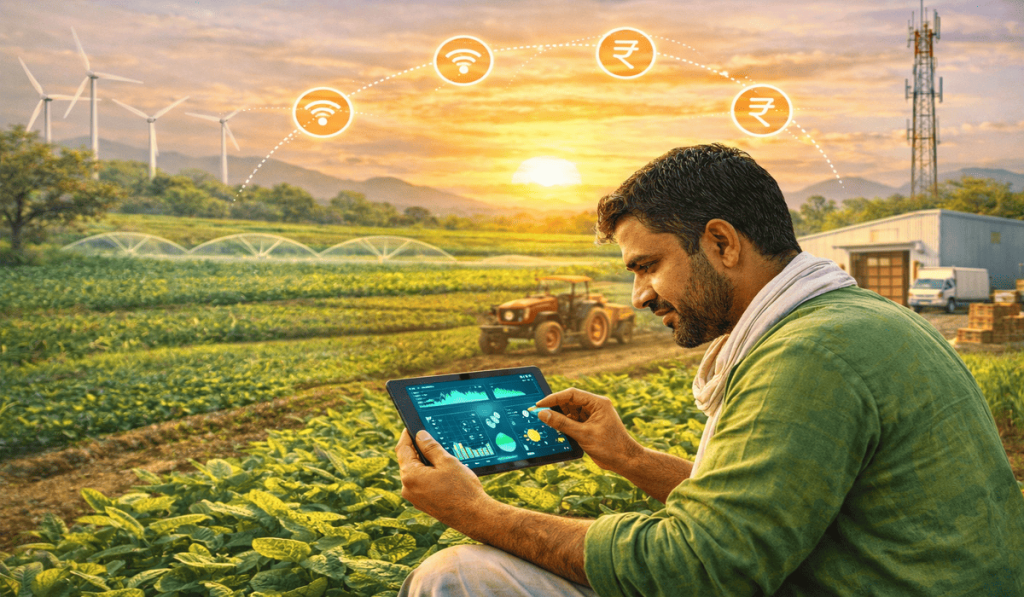
Modern technology is transforming agriculture. From precision farming and weather forecasting to smart irrigation and mobile applications, farmers today have tools that help them make better decisions, reduce risks, and increase productivity.
Importance of Education and Awareness
A major challenge is the lack of awareness among farmers about government schemes and modern practices. Providing proper education, training programs, and easy access to information can help farmers adopt improved methods like organic farming and crop diversification.
Market Access and Fair Pricing
Farmers often struggle to get fair prices due to limited access to markets. By connecting farmers directly with buyers and reducing the role of middlemen, we can ensure better income and financial stability.
Power of Collective Strength (FPOs & Cooperatives)
Farmer Producer Organizations (FPOs) and cooperatives allow farmers to work together. This collective strength increases their bargaining power, helps them access larger markets, and improves overall profitability.
Infrastructure and Supply Chain Development
Proper infrastructure such as storage facilities, cold chains, transportation, and rural connectivity is essential. These systems reduce post-harvest losses and allow farmers to sell their produce at the right time.
Financial Inclusion and Risk Management
Access to affordable credit, crop insurance, and financial literacy empowers farmers to invest in better inputs and manage risks effectively. This helps them move towards sustainable and secure livelihoods.
Recognizing Farmers as Nation Builders
Farmers are not just producers; they are entrepreneurs and custodians of the environment. Recognizing their contribution and giving them due respect is essential for building a strong nation.
Conclusion: A Stronger Farmer, A Stronger India
Empowering farmers creates a ripple effect across the economy. It strengthens rural communities, reduces migration, and ensures national progress.
Because when farmers rise, India rises with them.
❓ FAQs (Frequently Asked Questions)
1. What does empowering farmers mean?
Empowering farmers means providing them with access to technology, education, fair markets, and financial support so they can improve their productivity and income.
2. Why is farmer empowerment important for India?
Because agriculture is a major part of India’s economy. Strong farmers lead to better food security, economic stability, and rural development.
3. How can technology help farmers?
Technology helps farmers with better planning, weather forecasting, efficient irrigation, and direct market access, which improves productivity and reduces losses.
4. What are FPOs and how do they help?
Farmer Producer Organizations (FPOs) allow farmers to work collectively, giving them better bargaining power and access to larger markets.
5. How can farmers get better prices for their crops?
By connecting directly with buyers, using digital platforms, and reducing dependency on middlemen.