Healthy Morning and Evening Snacks That Won’t Spike Your Blood Sugar
Introduction:
For individuals managing diabetes, morning ,the interval between lunch and dinner—often referred to as the “evening tea-time”—is historically the hardest period to safely navigate. As mild hunger pangs kick in, it is highly tempting to reach for regular biscuits, samosas, or processed chips. Unfortunately, these refined carb-loaded options cause instantaneous blood sugar spikes. Here are 4 nutrient-dense, satisfying evening snacks engineered to keep you full and your glucose steady.
The Golden Rule of Diabetic Snacking:
The ideal diabetic-friendly snack must balance high dietary fiber and lean protein while keeping simple carbohydrates to a minimum. Protein and fiber work together to decelerate the rate of digestion, preventing sudden glucose surges.

Excellent Morning and Evening 4 Snack Options:
1. Premium Roasted Trail Mix (Nuts & Seeds):
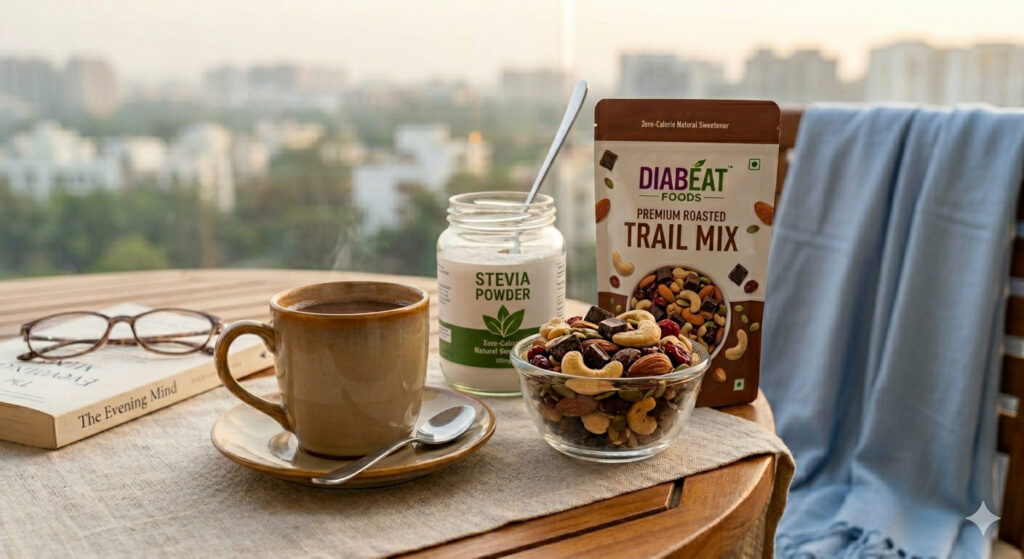
A carefully proportioned mix of dry-roasted almonds, walnuts, pumpkin seeds, and sunflower seeds offers a powerhouse of healthy fats and plant protein. This combo is highly cardioprotective and maintains stable, flatline insulin responses. Adding a touch of high-percentage dark chocolate chunks can provide safe indulgence.
2. Dry Roasted Makhana (Foxnuts) and Roasted Chana:
Makhana and chickpeas are budget-friendly, highly accessible sources of complex carbs and dietary fiber. Lightly roast makhanas with a touch of turmeric and rock salt. Paired with roasted Bengal gram (chana), this creates a crunchy, low-calorie, low-GI snack that satisfies oral fixation perfectly.
3.Tangy Sprouted Moong/Chana Chaat:
Combine sprouted green gram or black chickpeas with finely chopped onions, tomatoes, cucumbers, fresh coriander, and a generous squeeze of lemon juice. The natural fiber in sprouts ensures slow glucose release, while the Vitamin C in lemon enhances nutrient absorption.
4.Chia Seed Pudding with Stevia:
If your evening hunger manifests as a craving for something cold and sweet, a pre-made chia seed pudding is the answer. Soak chia seeds in unsweetened almond milk or skimmed milk and sweeten it naturally using Stevia. It is loaded with Omega-3 fatty acids, ensuring great metabolic and heart health.
Conclusion:
Ignoring morning and evening hunger or feeding it with high-glycemic foods are both detrimental to diabetes management. By switching to smart, protein-rich whole food snacks, you can effortlessly protect your health without ever sacrificing taste.
The following options and methods are the safest and most effective for controlling blood sugar when you’re craving sweets or snacks in diabetes:
1. Fruits with a Low Glycemic Index (GI)
Whenever you’re craving something sweet or a snack in the morning or evening, choose natural fruits with a low GI instead of refined sugar. These won’t cause a sudden spike in your blood sugar.
Best choices: Apples, pears, guavas, and berries (like strawberries or blackberries).
Benefit: The fiber in these fruits slows the absorption of sugar into the bloodstream.
2. A combination of protein and healthy fats
Instead of eating carbohydrates or sweets alone, combine them with protein and healthy fats. This combination slows down the digestion of food, keeping blood sugar stable.
Best choice: A handful of nuts (like almonds and walnuts).
3. Dark Chocolate (70%+ Cocoa):
If you have a strong evening craving for chocolate, choose dark chocolate over regular milk chocolate.
Condition: The chocolate must contain at least 70% cocoa or more. Eating a small piece doesn’t have a significant impact on blood sugar.
4. Use a Natural Sweetener (Stevia)
If you want to sweeten your morning or evening tea, coffee, or homemade snacks (like makhana kheer), use stevia instead of sugar.
Benefit: It’s a plant-based, all-natural, and zero-calorie sweetener that doesn’t raise blood sugar levels at all.
5. Use Cinnamon
Cinnamon has a naturally mild sweetness. Drinking a pinch of cinnamon powder mixed with warm water or herbal tea not only curbs cravings and sweets, but also improves insulin sensitivity.
The bottom line: curbing cravings in diabetes isn’t about starving yourself, but about making informed, safe choices. Always consult your doctor before incorporating any new diet into your routine.